
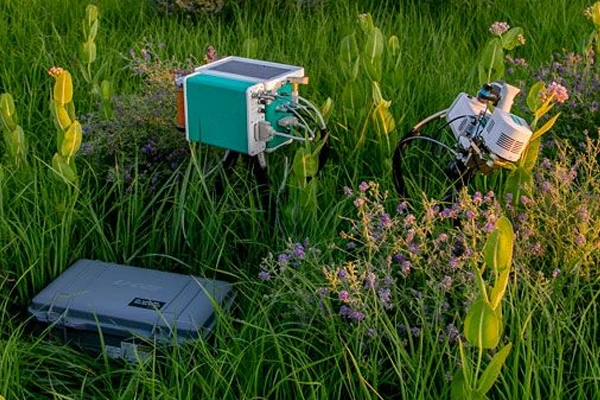
For decades, plant scientists have relied on gas exchange measurements to understand how plants assimilate carbon, regulate water loss, and respond to changing environmental conditions. Parameters such as photosynthetic assimilation, stomatal conductance, transpiration, and water-use efficiency have provided valuable insights into plant performance. However, as agricultural and environmental challenges become increasingly complex, researchers need tools that reveal more than conventional gas exchange alone.
The LI‑6878 Leaf Trace Gas Integration System represents a significant advancement in plant physiology research. By integrating the LI‑6800 Portable Photosynthesis System with selected LI‑COR Trace Gas Analyzers, the system enables simultaneous measurement of photosynthesis, trace gas fluxes, carbon isotope discrimination, and mesophyll conductance in a single workflow. The result is a more complete understanding of the biological processes occurring inside a leaf.
Looking Beyond Traditional Gas Exchange
Conventional gas exchange systems measure the movement of CO₂ and H₂O between leaves and the atmosphere. While these measurements are essential, they do not provide a complete picture of the journey taken by carbon dioxide once it enters the leaf.
As illustrated in the technical newsletter provided by DTPL ENVIRO, carbon dioxide must pass through multiple physical and biochemical barriers before reaching Rubisco, the enzyme responsible for carbon fixation. These barriers include stomatal resistance, diffusion through air spaces, cell walls, membranes, liquid-phase transport, and biochemical limitations within chloroplasts. Understanding these hidden processes is critical for improving crop productivity and resource-use efficiency.
Researchers now recognize that non-stomatal limitations often play a major role in limiting photosynthesis. Factors such as mesophyll conductance, electron transport efficiency, and biochemical activity can significantly influence carbon assimilation but are difficult to assess using standard gas exchange techniques alone.
What Makes the LI‑6878 Different?
The LI‑6878 is designed to bridge this knowledge gap.
Rather than requiring separate analytical instruments, complicated laboratory workflows, or post-processing of data from multiple systems, the LI‑6878 integrates directly with the LI‑6800 platform and selected LI‑COR Trace Gas Analyzers.
This integration allows researchers to simultaneously collect:
Photosynthesis data
Transpiration measurements
Carbon isotope discrimination
Mesophyll conductance (gm)
Methane (CH₄) flux
Nitrous oxide (N₂O) flux
All measurements are captured in real time through a single system.
Revealing the Hidden Pathway of Carbon
One of the most valuable capabilities of the LI‑6878 is its ability to support estimation of mesophyll conductance (gm).
Mesophyll conductance describes how efficiently CO₂ moves from leaf air spaces to chloroplasts where photosynthesis occurs. Even when stomata are open, internal diffusion limitations can reduce carbon assimilation and impact crop productivity.
By measuring carbon isotope discrimination alongside gas exchange, researchers can gain new insights into internal leaf diffusion processes. These measurements help quantify carbon movement within the leaf and improve understanding of photosynthetic limitations.
This information is increasingly important for:
Crop improvement programs
Water-use efficiency studies
Climate adaptation research
Photosynthesis optimization
Carbon sequestration studies
Measuring Greenhouse Gases at the Leaf Level
Plants are closely connected to greenhouse gas cycling within ecosystems.
The LI‑6878 extends research capabilities by enabling direct measurement of greenhouse gases such as methane and nitrous oxide at the leaf level.
Methane (CH₄) Flux Measurements
When paired with the LI‑7810 CH₄/CO₂/H₂O Trace Gas Analyzer, researchers can investigate plant-mediated methane transport and methane cycling in agricultural and natural ecosystems.
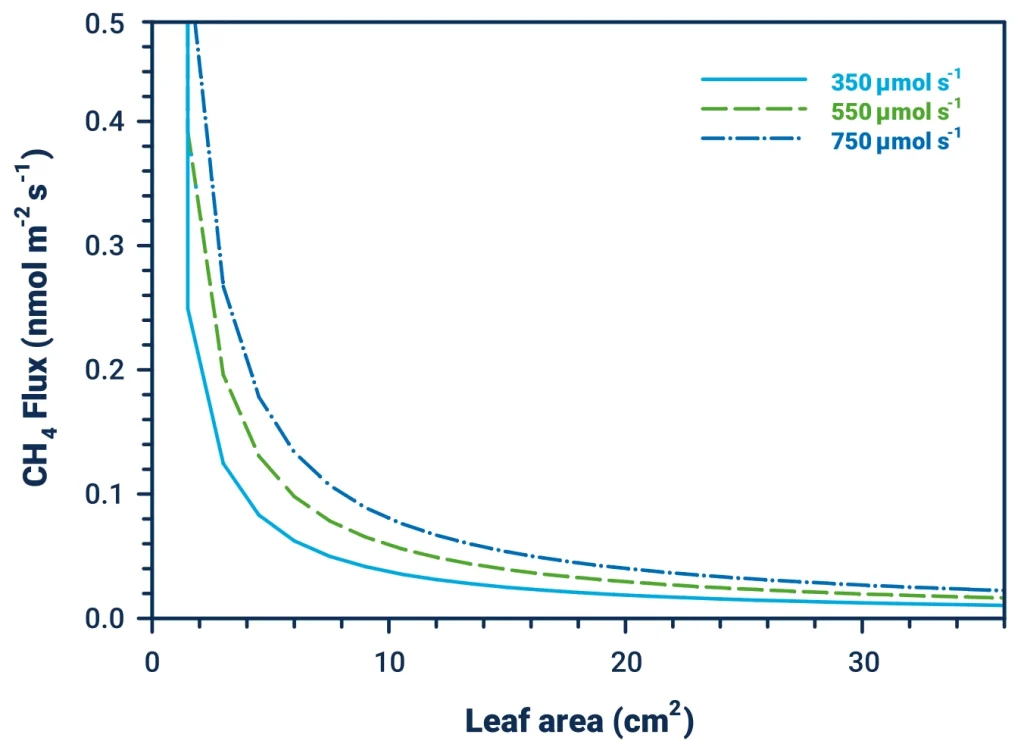
This capability has applications in:
Rice physiology research
Wetland ecology
Climate change studies
Carbon cycling investigations
Methane mitigation strategies
Understanding how plants contribute to methane emissions helps improve greenhouse gas inventories and ecosystem models.
Nitrous Oxide (N₂O) Flux Measurements
By integrating with the LI‑7820 N₂O/H₂O Trace Gas Analyzer, researchers can monitor nitrous oxide transport through plants in real time.
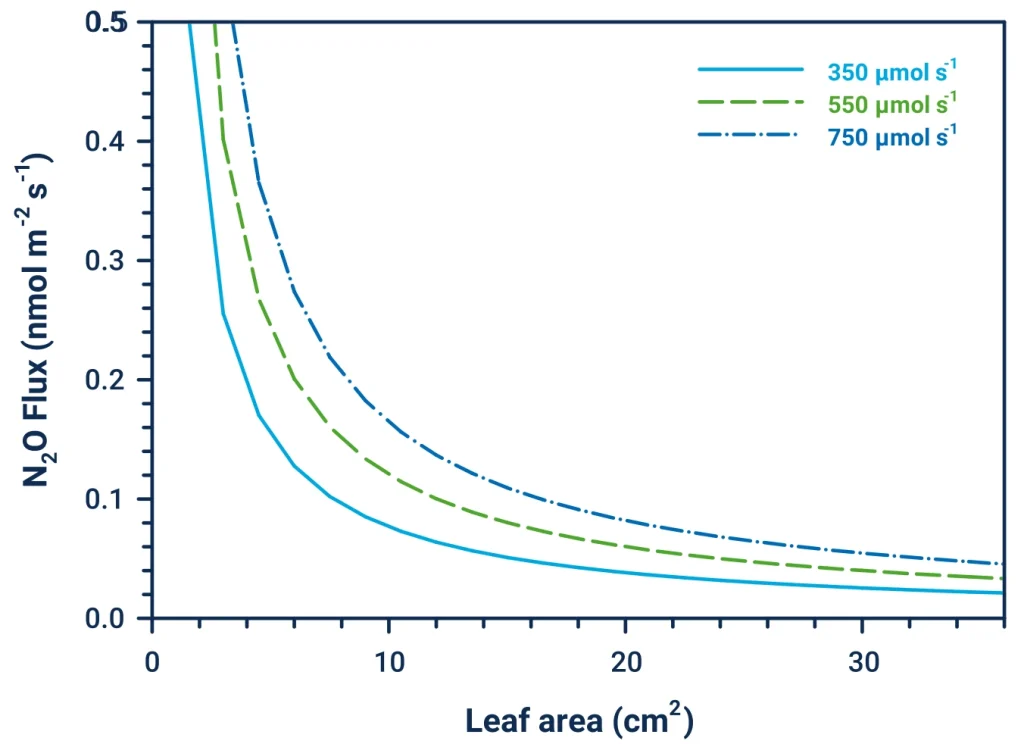
This information is important for:
Nitrogen-use efficiency research
Fertilizer management studies
Sustainable agriculture initiatives
Greenhouse gas accounting
Environmental impact assessments
Nitrous oxide is one of the most significant agricultural greenhouse gases. Quantifying plant-mediated transport pathways offers valuable opportunities to improve nutrient management and reduce environmental impacts.
Carbon Isotope Applications
When combined with the LI‑7825 CO₂ Isotope/NH₃ Trace Gas Analyzer, the LI‑6878 enables real-time carbon isotope discrimination measurements.
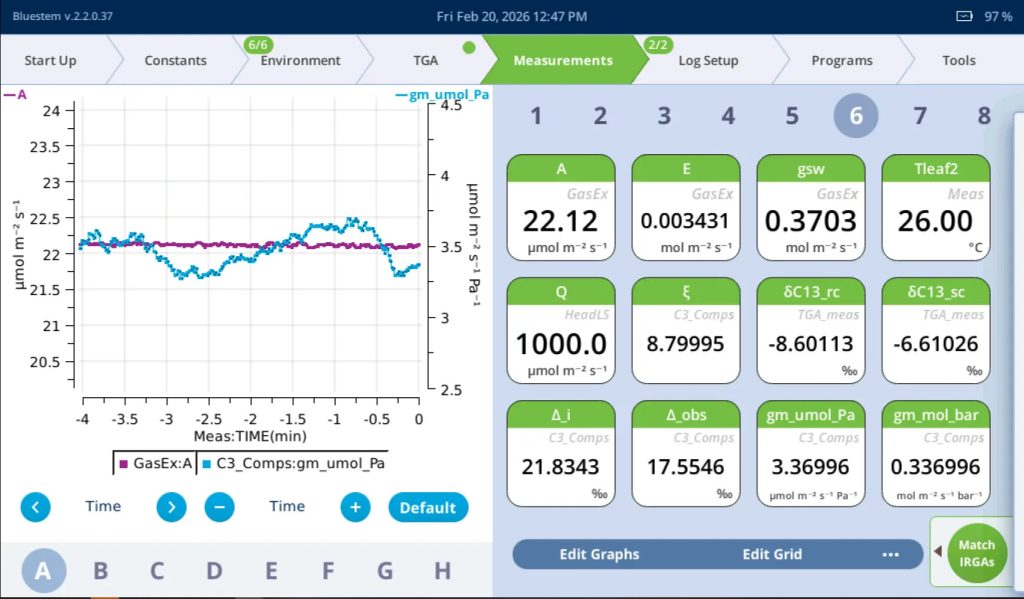
Carbon isotope analysis provides researchers with powerful information about:
Internal CO₂ diffusion
Photosynthetic efficiency
Mesophyll conductance
Water-use efficiency
Carbon assimilation processes
Traditionally, isotope measurements often required laboratory-based techniques involving sample collection, transportation, and time-consuming analysis. The LI‑6878 simplifies this process by bringing isotope measurements directly into the field and integrating them with gas exchange data.
From Laboratory to Field Research
One of the most attractive aspects of the LI‑6878 is its flexibility.
Researchers are no longer restricted to laboratory environments. The compact design allows measurements to be conducted wherever plants are growing:
Research fields
Experimental plots
Greenhouses
Growth chambers
Natural ecosystems
The familiar operating workflow of the LI‑6800 minimizes the learning curve while providing powerful new analytical capabilities. This allows scientists to focus on research rather than managing complex instrumentation.
Applications Across Scientific Disciplines
The versatility of the LI‑6878 supports a wide range of research areas, including:
Plant Physiology
Understanding fundamental photosynthetic mechanisms and leaf-level processes.
Crop Breeding
Identifying traits associated with improved photosynthetic efficiency and crop performance.
Water-Use Efficiency
Evaluating how plants utilize water under different environmental conditions.
Carbon Isotope Research
Studying internal carbon movement and physiological responses.
Greenhouse Gas Monitoring
Quantifying plant contributions to methane and nitrous oxide fluxes.
Climate Change Research
Improving models that predict ecosystem and agricultural responses to environmental change.
Precision Agriculture
Supporting data-driven crop management and resource optimization.
The Future of Photosynthesis Research
Modern agriculture faces increasing pressure to produce more food using fewer resources while reducing environmental impacts. Meeting these challenges requires a deeper understanding of how plants interact with their environment.
The LI‑6878 moves beyond conventional gas exchange by connecting photosynthesis measurements with carbon diffusion processes, isotope analysis, and greenhouse gas monitoring. Instead of viewing individual parameters in isolation, researchers can now study plant function as an integrated system.
By providing real-time insights into CO₂, CH₄, N₂O, and internal leaf physiology, the LI‑6878 helps researchers answer some of the most important questions in plant science today.
From the atmosphere to the chloroplast, and from CO₂ to CH₄ and N₂O, the LI‑6878 enables scientists to measure what truly matters—unlocking a more complete understanding of photosynthesis and plant performance.
